Understanding Sciatic Pain — And Why Movement Matters
Sciatic pain happens when the sciatic nerve, which runs from the lower back down the leg, becomes irritated or compressed. This can lead to pain, burning, tingling, numbness, or weakness that radiates from the lower back or buttock toward the leg and foot.
In many cases, gentle and well-directed movement plays an important role in relief. Specific stretching and strengthening exercises can help reduce pressure on the nerve, improve flexibility, support the muscles around the spine and hips, and promote better nerve function over time.
That’s why exercises are often recommended as a first and essential step in managing sciatic discomfort — especially when done correctly and consistently.
Before You Start
You’ll be doing two types of exercises:
- Stretching exercises to reduce tension and pressure on the sciatic nerve
- Strengthening exercises to support the muscles around your spine, hips, and core
How to prepare:
- Warm up your muscles first (a short walk, light jogging, or cycling helps)
- Never stretch cold muscles
How to do the stretching exercises:
- Repeat each stretch 2–3 times
- Hold each stretch for 5–10 seconds
- Breathe slowly and deeply
- Do not bounce while stretching
How to do the strengthening exercises:
- Start with 2–3 repetitions
- Gradually work up to 10 repetitions
- Hold each movement for 3–5 seconds
- Move slowly and with control
How often:
- Aim to do these exercises 2–3 times per day
- Stop if you feel sharp or severe pain
Stretching Exercises
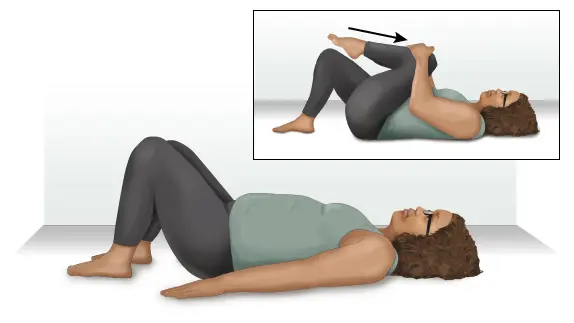
Single knee-to-chest stretch
Lie on your back on a firm surface, bend your knees, and have your feet flat on the floor. Pull 1 knee toward your chest until you feel a stretch in your lower back and buttock area. Repeat with the other knee.
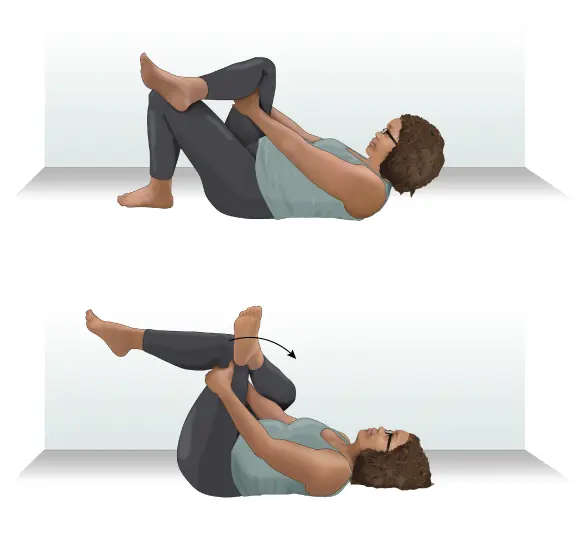
Deep hip stretch lying down
Lie on your back on a firm surface, bend 1 knee, and keep that foot flat on the floor. Cross the other leg over your knee. Grab the thigh of the leg that has the foot on the floor. Slowly, pull the bottom leg toward your chest until you feel a stretch in the other buttock. Repeat using the opposite leg as the bottom leg.
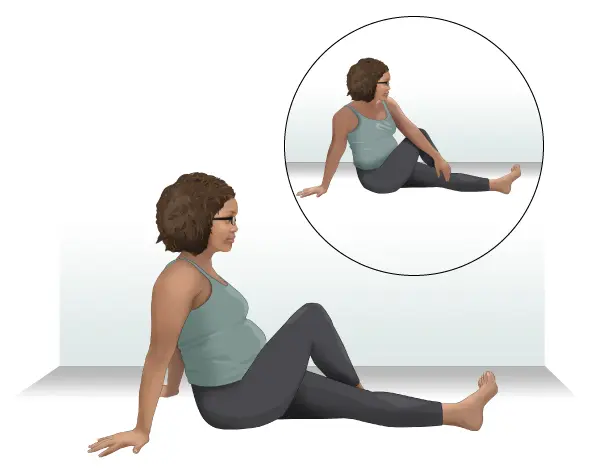
Deep hip stretch sitting
Sit on the floor with both legs straight. Take 1 leg, and cross it over the other leg so the ankle or foot of your top leg is next to your other knee. Now, take the elbow on the opposite side of your bent knee, and bring it to the outside of the bent knee.
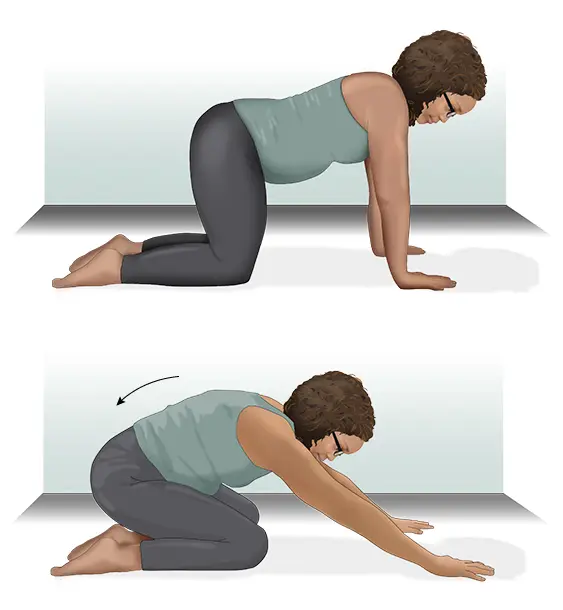
Sit back
Start on your hands and knees. Your hands should be directly under your shoulders. Your knees should be spread slightly and directly under your hips. Slowly stretch your back as you bring your hips toward your ankles. Your arms should be extended forward in a relaxed position, as your upper body sinks toward the floor.
Strengthening Exercises
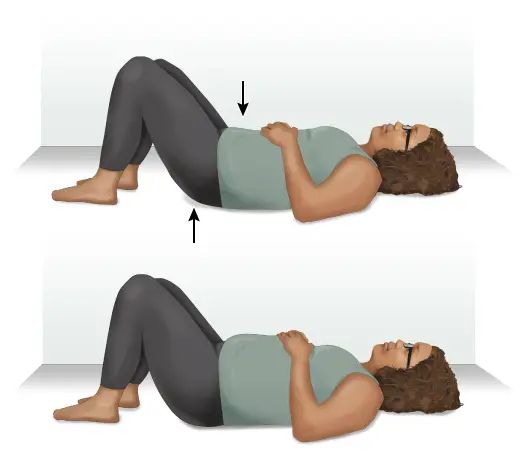
Pelvic tilt
Lie on your back with your knees bent and feet flat on the floor. Tighten your stomach muscles, and press your lower back down to the floor. Relax.
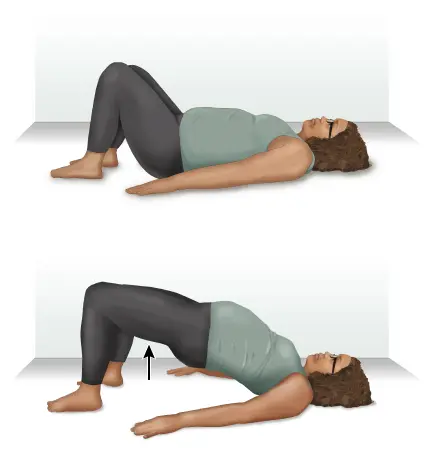
Hip lift
These are also called “pelvic bridges.” Lie on your back, bend your knees, and keep your feet flat on the floor. Tighten your stomach muscles, and lift your buttocks off the floor. You should feel this in your buttocks, not in your lower back.